Companion planting is the technique of growing different plants together for mutual benefits like pest control, attracting pollinators and improving soil. Over the years, many customers have asked us for information about companion planting and requested a collection of seed varieties to grow as companion plants.
We chose 9 of our favorite companion plants and think you'll see a big difference with these flowers and herbs growing in your garden! Here are the 9 varieties in the collection and some of their benefits:
Cempasúchil / Tall Mexican Marigold (Tagetes erecta) - Marigolds have long been known to be a great companion plant to tomatoes and they are beneficial to grow around other vegetables too. The two main benefits of marigold are aroma and bloom. The distinct aroma of marigolds deters pests and the blooms attract beneficial insects like pollinators. The blooms of this tall variety are very large and bloom in deep orange and yellow.
Origin: We were given the parent seed of these marigolds by a friend from Mexico whose family has grown and saved them for generations in their gardens in the state of Chiapas. (Approximately 30 seeds per packet)
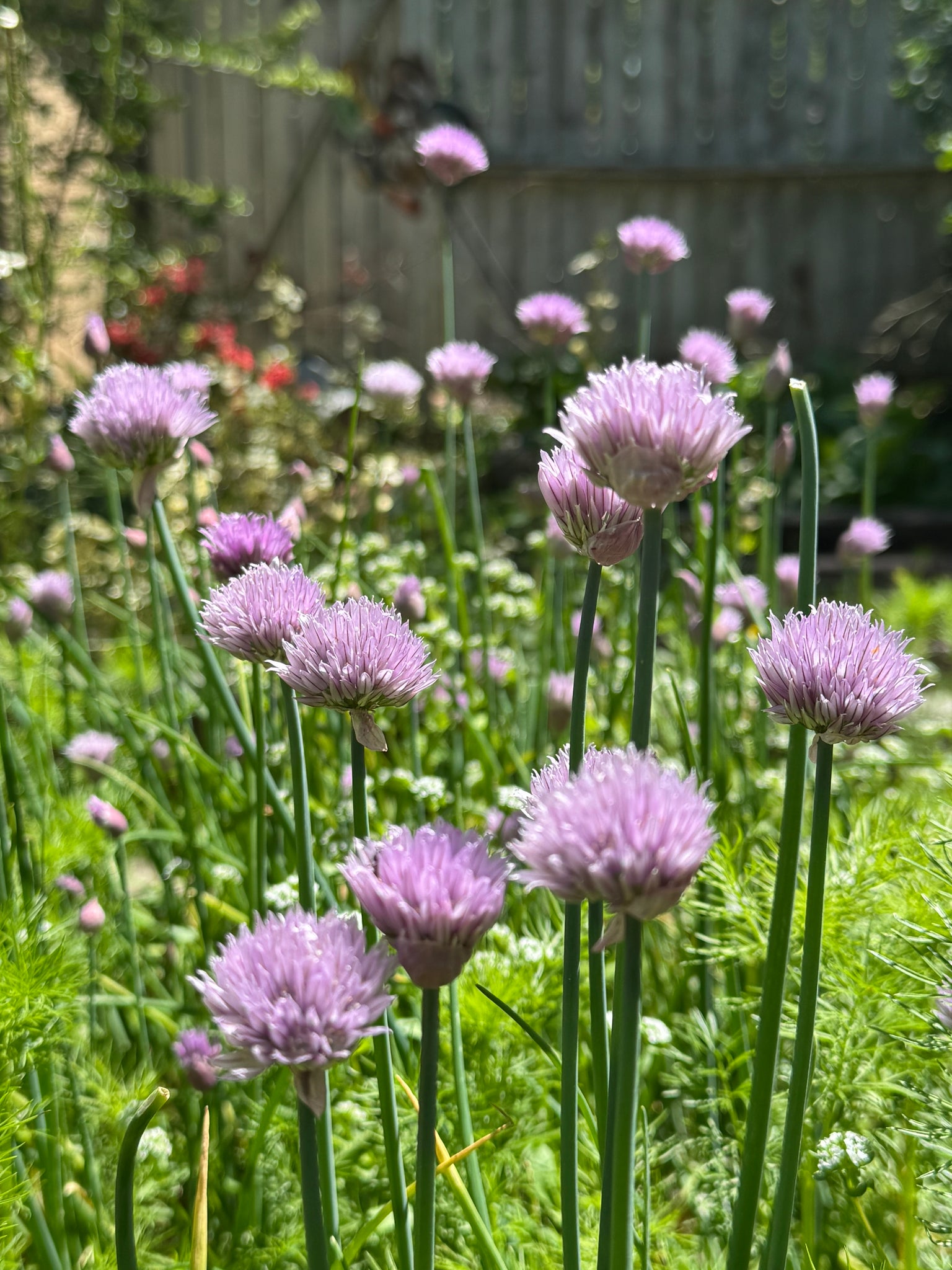
Chives (Allium schoenoprasum) - Chives are perennial and grow back year after year. The greens sprout early in the growing season and we love to add them to pretty much any meal. Chives are a fantastic companion plant repelling pests like aphids, carrot flies, and Japanese beetles, while improving the growth and flavor of neighbors. A recent study by NC State University also showed that honey bees have a strong preference for chive nectar so the beautiful purple blooms will certainly bring the pollinators to your garden.
Origin: Grandma has a patch of chives that have been growing for at least 40 years at our childhood home. Those chives provided the parent seed for the chives in our catalog. (Approximately 50 seeds per packet)
Nasturtium (Tropaeolum majus) - Nasturtiums are excellent companion plants, acting as trap crops for aphids, attracting beneficial pollinators (like hoverflies), deterring pests (like cabbage loopers), and improving the flavor/growth of vegetables like cucumbers, squash, tomatoes, beans, and brassicas (broccoli, kale), while also serving as a living mulch. The entire plant (seeds, flowers foliage) is edible and has a wonderful peppery flavor.
Origin: We collected the parent seed of our nasturtiums from plants at a rest stop off the A8 highway in France near Monaco. Nasturtiums grow wild along the Mediterranean coast and over the years we have had some wonderful new colors emerge from the original parent seed. (Approximately 30 seeds per packet)
Calendula (Calendula officinalis) - Calendula is a fantastic companion plant that deters pests like aphids and whiteflies while attracting beneficial insects (bees, ladybugs, lacewings) and pollinators, making it great with tomatoes, peppers, cucumbers, beans, brassicas (kale, lettuce, broccoli), and squash, creating a diverse, pest-resistant garden ecosystem. It adds color and can be interplanted throughout veggie beds for season-long benefits. Calendula petal are edible and are frequently used to make natural body care products like salves and soaps.
Origin: The parent seed of our calendula came from the garden of a friend in Prescott, Arizona and from seeds we saved in Turin, Italy at Chiesa di Santa Maria del Monte dei Cappuccini. (Approximately 50 seeds per packet)
Borage (Borago officinalis) -Borage is a fantastic companion for tomatoes, squash, cabbage, and strawberries, repelling pests like hornworms, attracting vital pollinators like bee and butterflies. Borage's deep taproot pulls nutrients from deep soil, making it a "dynamic accumulator" that enriches topsoil when chopped and dropped. Used the leaves in fall as a green compost. Borage flowers are also edible and very tasty.
Origin: The same strain of borage has grown in our garden for 20 years. We saved the parent seed from the garden of a friend in Swannanoa, NC. (Approximately 35 seeds per packet)
Dill (Anethum graveolens) - Dill is a great companion for brassicas (cabbage, broccoli, kale), cucumbers, lettuce, and onions, as it deters pests like cabbage moths and aphids while attracting beneficial insects like ladybugs and wasps that prey on them, boosting garden health and yields. Dill is also the host plant for swallowtail butterfly caterpillars so keep an eye our for the beautiful hungry caterpillars on your dill late in the season.
Origin: We brought the parent seed of our dill home to our garden from the farm of our cousin in Hungary, just north of Budapest. (Approximately 100 seeds per packet)
Love-lies-bleeding amaranth (Amaranthus caudatus) - Amaranth is a great companion for many plants, working well in the "Three Sisters" (corn, beans, squash) as a "fourth sister," supporting nightshades (tomatoes, peppers, eggplant) by deterring pests, and benefiting root crops (carrots, beets) by loosening soil and attracting beneficials like ladybugs. Amaranth is also a great "trap crop". Leaf cutters love chewing holes in amaranth leaves where they do little damage while leaving more tender plants alone.
Origin: In 1998, Papa was working on a farm in Ventura County, California. A friend on a farm in Ojai, just over the mountain, gave him the parent seed of both of the amaranth varieties in our catalog. She had brought the seeds from her Grandmother’s garden in Guatemala where the family had been growing and saving the seeds for generations. (Approximately 100 seeds per packet)
Tulsi / Holy Basil (Ocimum tenuiflorum) - Tulsi (Holy Basil) makes a great companion for many plants, repelling pests like aphids and mosquitoes while attracting pollinators, and it grows well with tomatoes, peppers, marigolds, mint, and other basils, benefiting from similar needs and enhancing flavor/pest control. Tulsi leaves make a wonderful tea when dried and it is an important, holy plant in Hinduism.
Origin: In 2004, well before our first child was born, we spent nearly a year traveling in SE Asia. While in Cambodia in the city of Siem Reap, we stayed in a wonderful guest house near the Temples of Ankor Wat.
At the guesthouse, there was a beautiful courtyard and garden filled with an array of tropical plants. All types of orchids bloomed in the garden and there were many fruits like mango and banana that the hosts would harvest and serve for our breakfast.
There was a large patch of Tulsi in the courtyard and the inn keeper gave us some seeds from the plant. She was pleased by the thought of us growing the seeds from her garden in ours at home. Many years later now, the Tulsi from Cambodia still grows in our garden. (Approximately 100 seeds per packet)
Zinnia (Zinnia elegans) - Who doesn't love zinnias? Zinnias are excellent companion plants, boosting vegetable gardens by attracting pollinators (bees, butterflies) for better yields and drawing beneficial predatory insects that eat pests like aphids, while also offering vibrant color and acting as a trap crop for some pests, pairing well with tomatoes, cucumbers, squash, beans, basil, and marigolds for a beautiful, productive, and pest-resistant garden. Zinnias are an outstanding cut-flower too and our mix has a wonderful vibrant range of colors with big blooms.
Origin: Zinnias were the first seed variety that we ever saved in 1999 when we had a beautiful little garden in the shadow of Watch Knob in Swannanoa, NC. The parent seed of our zinnias came from a dear and departed friend who had a beautiful garden in Prescott, AZ. We have collected zinnia seeds on our travels and have added strains from Thailand, France, Myanmar, Hungary, and Mexico to our mix. We also cross pollinate zinnias every year in the hope of breeding new varieties so you may see zinnias in your garden that came from our breeding efforts. (Approximately 50 seeds per packet)
We hope you enjoy growing these 9 companion plant varieties in your garden and while each variety is wonderful in their own right, they will also be beneficial for all the other plants in your garden too!